
Complete the following form to download your document.

Climate Action at Univar Solutions
Measuring our progress on our journey toward a net-zero carbon future
Climate change is a pressing issue today, and we recognize the importance of addressing it for a better tomorrow. We are committed to adopting appropriate measures and best practices to help mitigate climate risks and the associated impacts on our business operations. Our short-, medium- and long-term goals are designed to ensure our global operations are continuously working toward carbon neutrality.
Eliminating emissions from our supply chain is vital for combatting climate change. We are committed to adopting appropriate measures and best practices to mitigate climate risks and the associated impacts on our business operations. The actions we take today will have a significant impact in future years.
Learn about how we are monitoring and mitigating energy use throughout our supply chain, from the products we source and services we procure to the end of life of our products.

Dr. Liam McCarroll
Senior Director of Global Sustainability
“Univar Solutions' driving purpose is to keep our communities healthy, fed, clean and safe, and recognizing the importance of carbon reduction is central to supporting the wellbeing of communities around the world. Investing significantly in climate change reduction is at the heart of our business and operations, and we are committed to implementing and continuously improving our technology, processes and culture to support our journey toward a net-zero carbon future.”
Where we take action
Univar Solutions’ approach to climate change and energy use is based on (1) optimizing energy efficiency, (2) using electrical power where possible for heating, ventilation, air conditioning, plant equipment and transportation and (3) diversifying our fuel sources. These three categories are core to our strategy on emissions reduction.
Infrastructure and Investment
- Committed to invest $3 million annually in low-carbon technology across the business
- Developing on-site renewable energy production and procurement
- Increasing use of non-conventionally powered vehicles
Processes and Procedures
- Transitioning to increased procurement of electrified FLTs and hybrid cars
- Rolling out site sustainability assessments to key locations across EMEA and North America
- Beginning in 2022, reporting in line with TCFD, SASB and GRI frameworks
Culture
- 80 percent of all employees globally completed sustainability training in 2021
- Employee recognition programs focused on advancing our ESG goals
- Promoting sustainability action among Univar Solutions employees on a day-to-day basis
2022 Performance Highlights
The report tracks Univar Solutions’ progress against its ESG targets over the past year and shares 2023 metric highlights including:
- Scope 1 and 2 emissions reduced 26 percent from baseline
- Scope 3 emissions intensity increased by 0.3 percent from baseline

Our emissions reductions progress and initiatives
The significant reductions in emissions that we have seen are a testament to the hard work of our teams and the impact of the plans they have delivered on.
Other factors underpinning our progress include secondary benefits of reduced consumption tied to the reduction of our operational footprint; reduced travel and lower occupancy in our offices following COVID-19; and reduced energy use and emissions outside of our sustainability strategy.
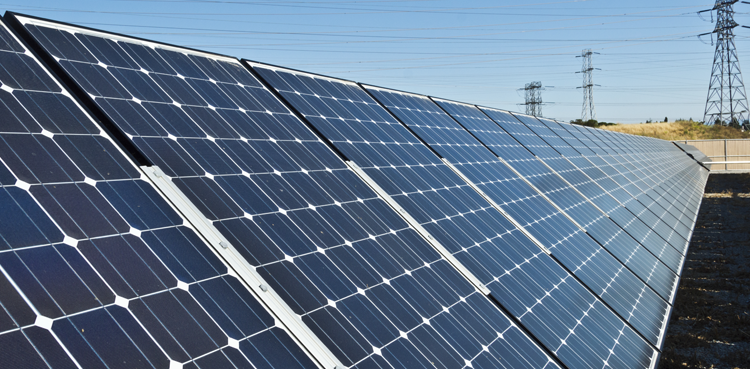
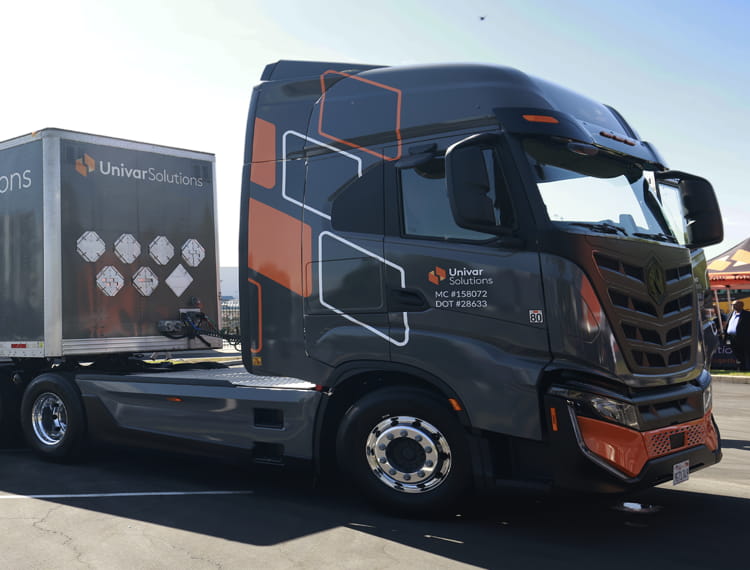
We also have several initiatives across Europe, the Middle East and Africa to support the global goal of carbon neutrality by 2050. These programs included launching a new company car policy that limits emissions from business travel and encourages usage of hybrid and electric vehicles. We installed solar panels at sites in Spain that satisfy one third of required energy demand, and purchased 35 new trucks with Euro 6 engines to increase telematics to track and improve driver behavior, fuel efficiency and reduce emissions.
Additionally, we have expanded our investment in solar arrays at the Paulínia site in Brazil, as part of our wider strategy to increase our on-site renewable energy generation capacity. This is our largest solar project to date.
Case study: A new industry standard for efficiency and safety in the market
To address emissions reduction in line with our 2025 and 2030 deliverables, we have identified the impacts of our activities by measuring and tracking emissions at the site level across all geographical regions in which we operate. These data insights enable us to effectively target our actions.
Key levers to reduce emissions in line with our 2025 and 2030 deliverables include:
- Reducing fleet emissions by enhancing fuel efficiency in Internal Combustion Engine (ICE) vehicles, expanding the use of low- and zero-emission vehicles, diversifying fuel sources, and increasing the use of biodiesel and renewable diesel
- Energy efficiency initiatives, including investments in advanced equipment such as heating and cooling systems, compressed air infrastructure, lighting, sensors/timers, automation, and insulation.
- Enhancing operational processes to ensure equipment operates at peak efficiency. Examples include reviewing operating temperatures and air system pressures, improving start-up and power-down procedures, and meeting maintenance requirements.
- Increase in renewable energy and using market tools to promote renewable energy generation via REC’s and on-site Power Purchase Agreements (PPA’s)
- Fleet routing and mode optimization to reduce miles travelled
The achievement of these Scope 1 and 2 emissions reduction activities continues to be closely assessed for the impact they will have on our business, including the capital investments required, operational leases, and the return on investment we anticipate due to these climate change mitigation activities. These financial risks and opportunities are integrated into our business strategy and financial planning. The investments and expected returns are reviewed periodically by the Company’s senior management and the ESG Committee of the Board of Directors.
Beyond our Scope 1 and 2 emissions, we are also committed to reducing Scope 3 emissions through our value chain collaboration efforts. The activities supporting our Scope 3 emissions reduction plans have been developed as part of setting out our inaugural Scope 3 emissions reduction goal in early 2024. Further details on our approach to reducing these emissions and examples of our activities are detailed in the Sustainable Solutions section of this report.
Footnotes
1. Baseline for goals to 2025 and 2030 is calculated from the average of 2019 and 2020 performance.
2. Historic figures reported in this report may differ from those in previous reporting. This is due to purposeful restatements, details of which are
provided in the Behind the Report section.
3. Reductions in emissions related to Scope 2 emissions were based on Market-based emissions for baseline and current year.